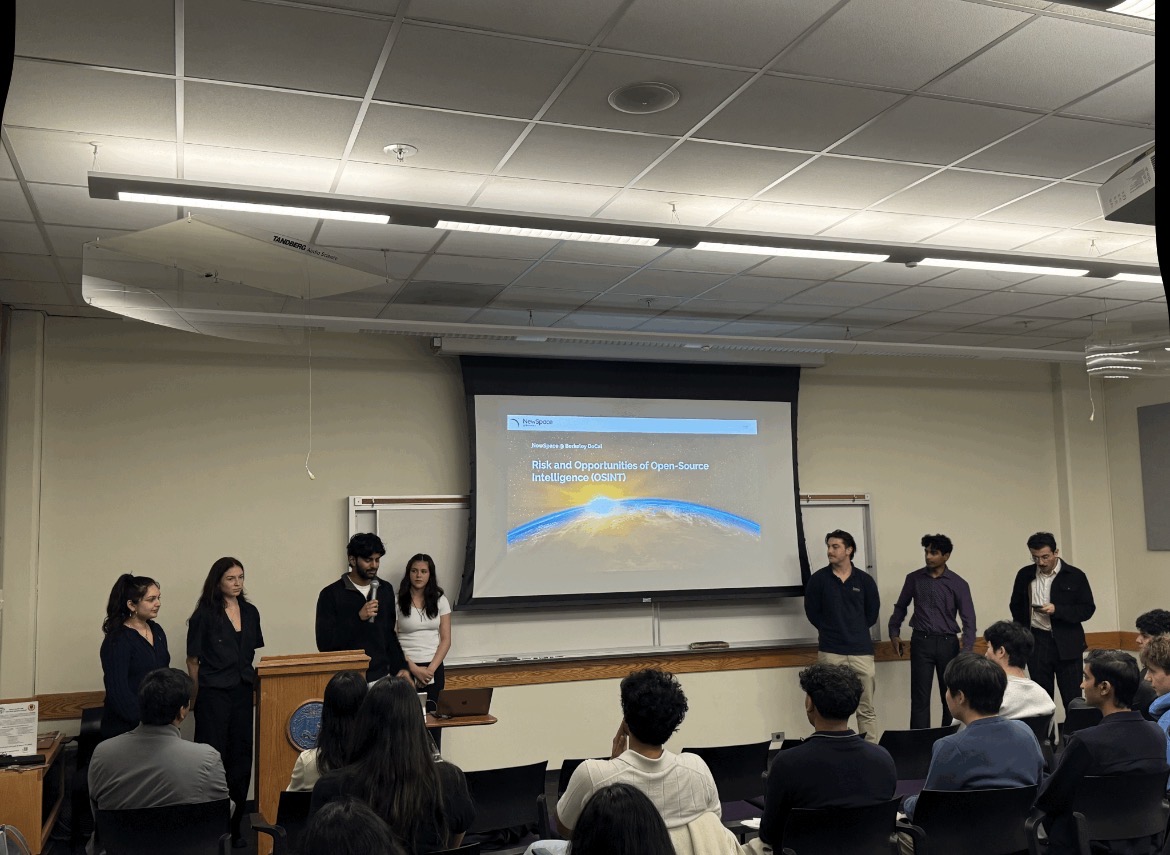
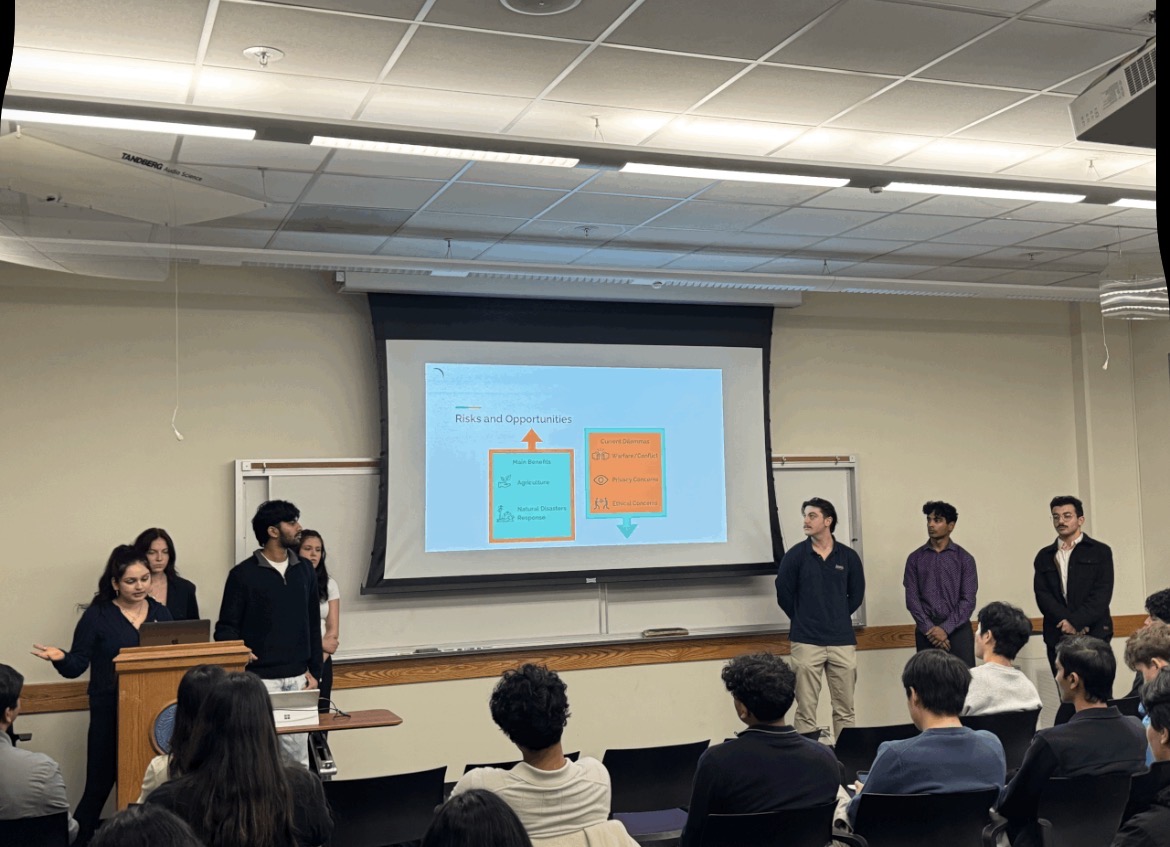
OSINT Remote-Sensing Policy Paper
- Relevant Skills: Policy Research, Risk Assessment, Multi-Governance Frameworks, Remote-Sensing, OSINT
Background
The exponential growth of commercial Earth Observation (EO) satellites and open-source intelligence (OSINT) capabilities has created both opportunities and risks. The global EO market, valued at $9.4B and expected to double in 8 years, enables agriculture monitoring, disaster response, and human rights documentation — but also raises privacy, security, and regulatory challenges. Current treaties like the Outer Space Treaty fail to address AI, synthetic aperture radar, or private-sector dominance, leaving a governance vacuum.
Goals
Our paper set out to:- Research emerging remote-sensing technologies and global market trends
- Evaluate international legal frameworks and identify gaps in satellite imagery regulation
- Highlight divergences in national regulations and enforcement capacity
- Propose equitable governance mechanisms balancing innovation, privacy, and security
- Draft a policy paper and poster under industry mentorship to advance safeguards for responsible OSINT use
Design and Execution
- Research & Analysis:
- Mapped regulatory divergences across the U.S., EU, and developing space nations
- Reviewed limitations of existing bodies (COPUOS, Artemis Accords, Hague Working Group, ITU) in regulating modern space activity
- Assessed risks of public–private partnerships driving higher resolution standards without oversight
- Policy Recommendations:
- Proposed creation of UN-backed international committee for remote-sensing oversight
- Suggested sector-specific resolution standards (defense, agriculture, climate monitoring) to prevent one-size-fits-all loopholes
- Outlined compliance incentives — companies adhering to stricter standards gain access to contracts and partnerships
Outcome
- Identified key governance gaps in satellite imagery regulation across global markets
- Advanced a UN committee model with estimated $19M annual cost (<0.2% of global EO budgets) to ensure sustainable oversight
- Delivered concrete recommendations for equitable governance frameworks balancing public and private actors
Image Gallery (Click to zoom):