Miniature Wind Turbine
- Relevant Skills: SolidWorks CAD & FEA, Aerodynamics, Mechanical Design, Structural Analysis, Rapid Prototyping/Iterative Design, Experimental Testing, Technical Documentation
Background
In Fall 2023, I designed, built, and tested a miniature wind turbine with my project team for ENGIN 26: Three-Dimensional Modeling for Design. The goal was to explore wind energy principles and deliver a turbine capable of maximizing power generation under strict constraints.
Goals
The turbine had to meet the following requirements:- Minimum stiffness >8 N/mm
- Total mass <350 g
- Tower height 16 inches, blade length ≤3 inches
- 3D printed using ABS, modular construction
Design and Execution
- Blade Design:
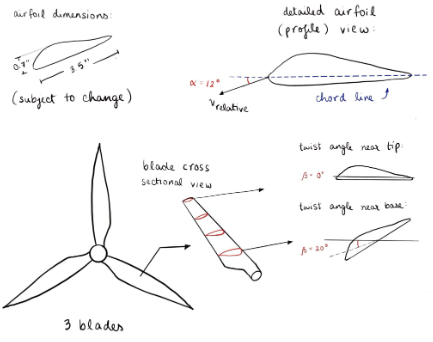
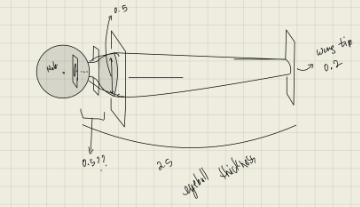
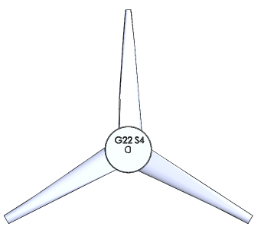
- Final rotor design used 3 blades, each 2.5” in length.
- Symmetric airfoil selected to balance performance at low Reynolds numbers.
- Blades modeled in SolidWorks, then 3D printed.
- Tower Design:
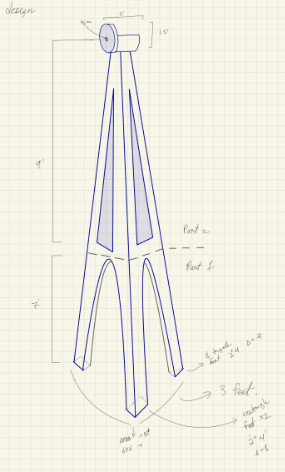
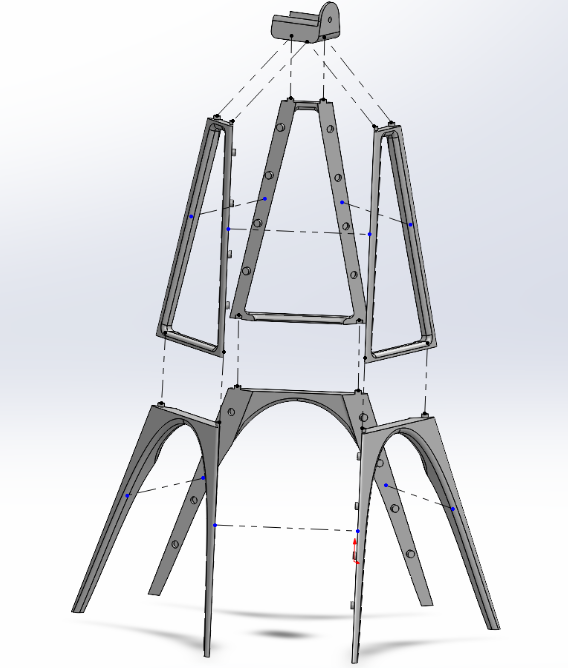
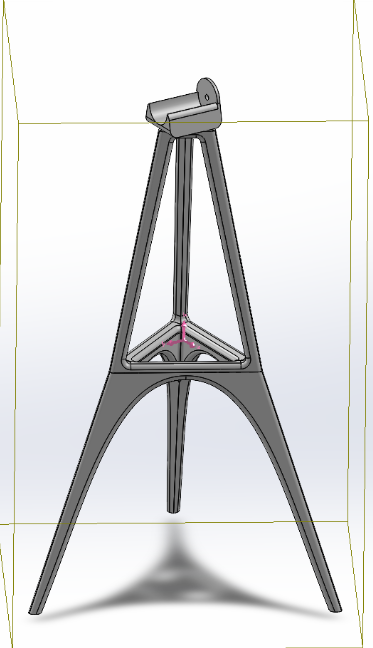
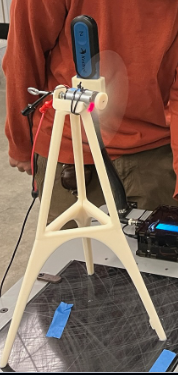
- Eiffel Tower-inspired, three-legged, radially symmetric design for stability
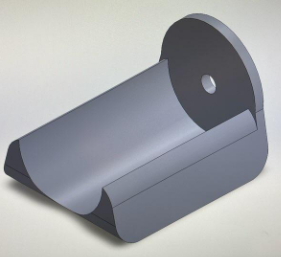
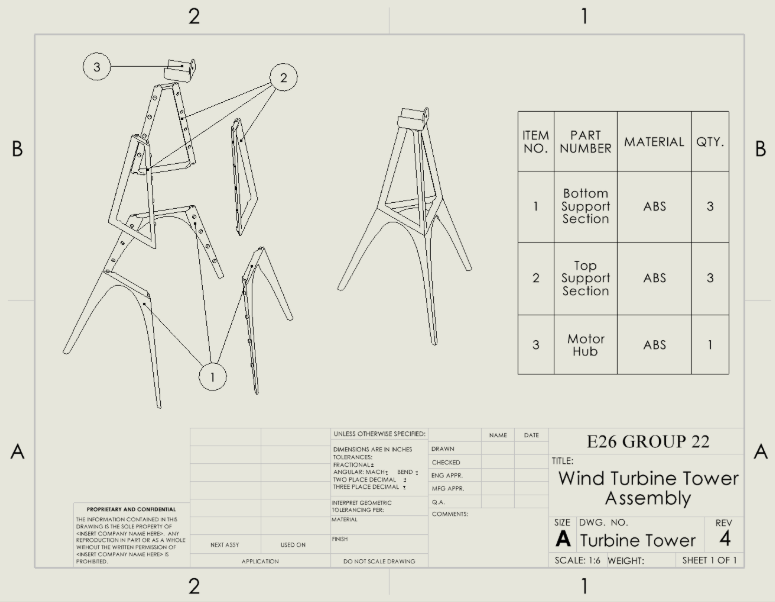
- Modular structure (top and bottom split into three parts) with male-female couplings for alignment
- Equilateral triangle cross-section, wide base tapering to minimize flow interference
- Filleted edges to reduce stress concentrations and improve aerodynamics
- Simulation and Testing:
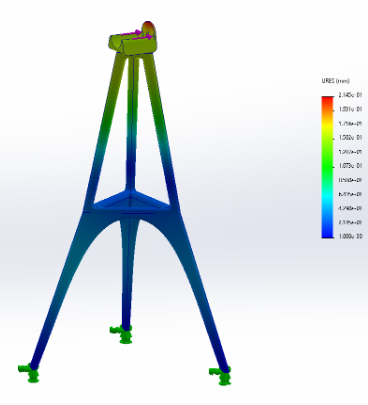
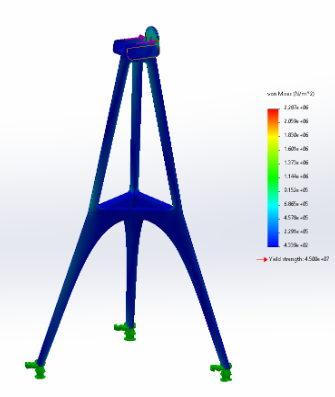
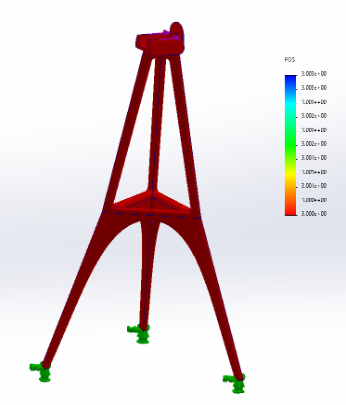
- FEA (SolidWorks): Maximum displacement of 0.2145 mm under 9.81 N load. Factor of safety >3 across tower
- Power Output: Peak power = 0.3908 W at ~4050 rpm (25 mph wind)
- Deflection Test: Withstood 1 kg load with only 0.94 mm displacement, confirming >8 N/mm stiffness
- Efficiency: Experimental efficiency calculated as ~3.19% (0.3908 W / 12.236 W theoretical)
- Documentation:
- Maintained detailed CAD drawings, test data, and FEA reports.
- Findings presented in final project report with recommendations for future improvements.
Outcome
The turbine successfully met weight and stiffness constraints:- Mass: 253.3 g
- Stiffness: 8–16 N/mm achieved
- Peak Power: 0.3908 W
- Efficiency: ~3.19%
Image Gallery (Click to zoom):
Downloads: